A walk through a brewery that keeps more than just drinks
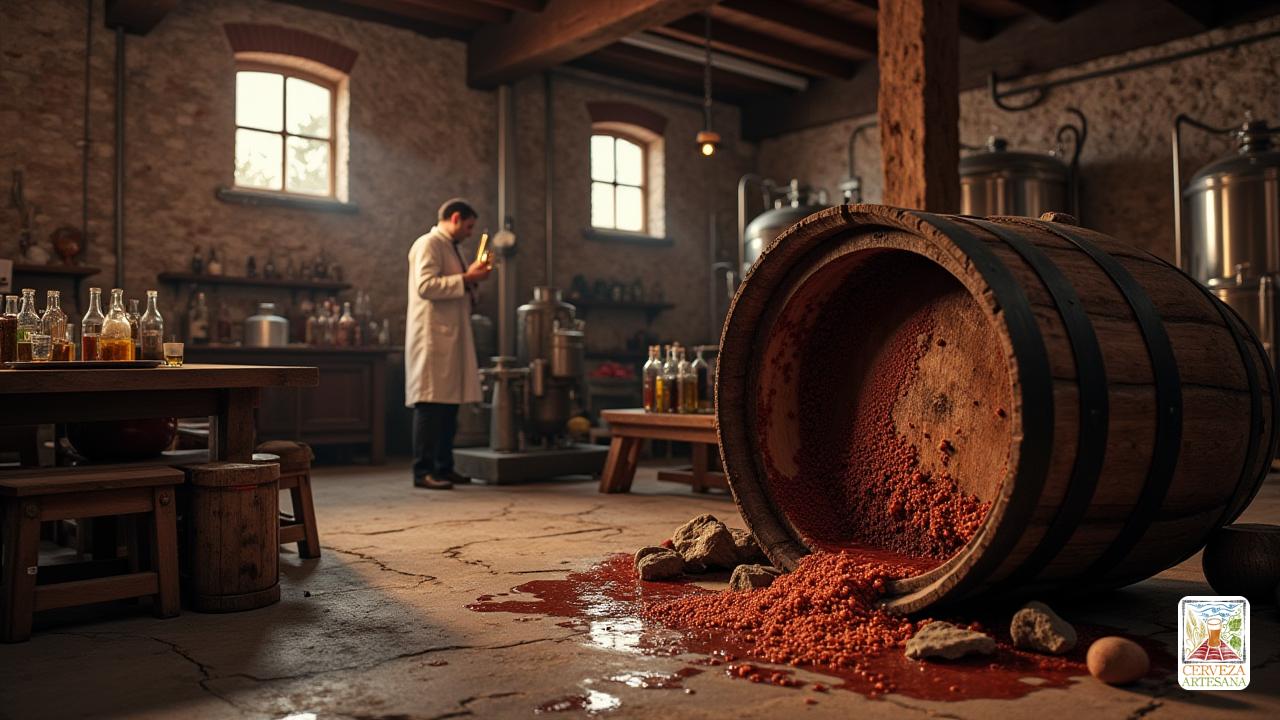
Imagine entering a small brewery in Seattle and Toparte with a liquid history well that has been fermented since time immemorial. In 2014, a group of scientists decided to transform that nostalgia into knowledge, entering the heart of an old beer barrel, opening the door to a microscopic world full of surprises.
What makes a beer wild and different?
Unlike conventional beers, which depend on specific and controlled yeasts, the so -called ‘wild beers’ use the environment where they ferment. In the case of Morris, his barrel accumulated a community of typical microbes of nature, which turned the must into a tapestry of unique flavors, aromas and sensations, evoking a very European tradition, especially Belgian.
The challenge of deciphering a microbial community on stalking
The group, led by geneticist Maitreya Dunham, not only opened the barrel, but also proposed to understand what microbes were there, living in communion and giving life to that craft beer. With a sample in hand, they began to apply a revolutionary technique called Hi-C sequencing, which is like a genetic detective that relates DNA pieces to identify who is at the microbial party.
From the laboratory: the finding of unique hybrid yeast
What they discovered was even more exciting than they expected. Among the varied mixture they found a yeast that not only belonged to the genus Pichia, but was also a hybrid of two different species, one of them completely unknown until then. They called her Pichia Acecheca, in honor of her origin in an old warehouse, and represented a biological union of the most curious.
This hybrid turns out to be just one more in the world of experimental artisanal beers. The story reveals that even the famous Lager beer arises from a crossing of different species, demonstrating that nature has much to offer in terms of microbial diversity.
Implications for craft beer and fermentation innovation
The presence of the Pichia Apotheca in that warehouse beer not only enriches the sensory palette, but also opens the door to new possibilities in the beer world. The scientists tried to make a beer only with that hybrid yeast, but they found that they produce little alcohol, something common in many microbes that are not designed to create beer alone.
Even so, the presence of these hybrids could be key to understanding how microbes communities contribute to complex flavors and aromatic profiles in spontaneous fermentation beers. In addition, the identification of these creatures could facilitate the creation of more predictable and controlled fermentations, without losing that wild essence that loves connoisseurs so much.
The future of beer innovation is already underway
Bioengineering experts and some brewers see in these findings an opportunity to explore new hybrids and microbial mixtures, which allow to produce beers with unique profiles without depending exclusively on tradition or luck. The possibility of identifying and isolating specific microbes opens roads to more innovative, stable and personalized beers.
Perhaps in the not too distant future, we can enjoy beers with profiles that we barely imagine, created from microbial combinations that until recently only existed in laboratories. The magic of fermentation, in the hands of modern science, seems to be in full boiling.