Cereals: The taste of the world in each cup and bottle
Cereals are the backbone of the diet in multiple cultures. From the vital wheat in Europe, the coveted rice in Asia and Oceania, to the fundamental corn in America, each of these crops feeds millions of people. But what about barley? Although its weight in terms of calories is lower, its status as a star in the production of beer and whiskey places it on a well -deserved pedestal.
Barley and science: an alliance for a better drink
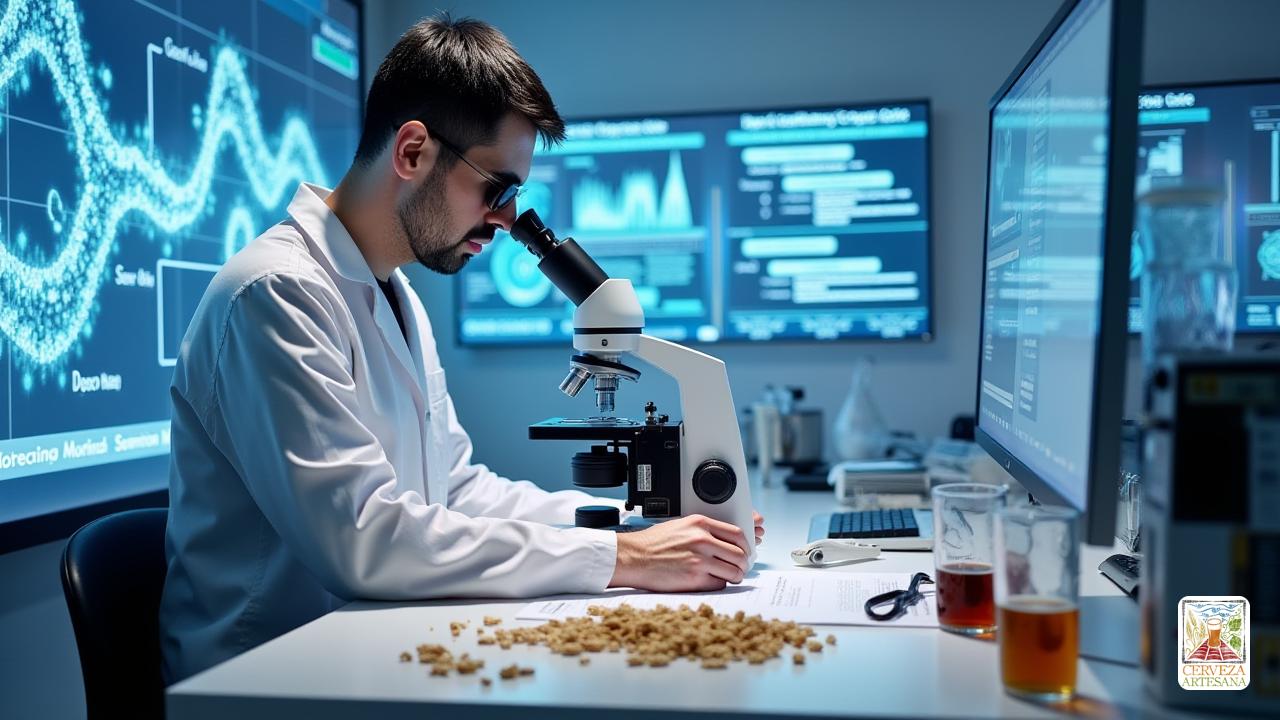
Thanks to an international effort of 77 researchers who have launched the genome of barley, a new hope for beer lovers has emerged. After a decade of intense work, the findings have seen the light in the prestigious Nature magazine. With this information, the possibility of making beers and whiskeys of higher quality becomes a tangible reality.
Why did they take so long?
Deciphering the barley genome complex was not an easy task. Unlike humans that we have 23 pairs of chromosomes, barley has only 7, but its genome is a giant, twice as much as ours! This means that there are endless repetitive sequences that are complicated to analyze and understand. But in the midst of this genetic chaos, there is also magic: barley can produce an enzyme known as Alfa-Amilase, which plays a crucial role in the transformation of starch to simple sugars during the malted process.
Of genes and malted: the flavor key
The malted is the authentic hero behind the good beer. This process includes the production of Alfa-Amilase, and focuses on finding out what genes are fundamental to make it better. According to Nils Stein, a pointer geneticist in research, these discoveries can enrich the diversity of crops, allowing not only to adapt the barley to different industries, but also combat pests and resist extreme climates.
A sweet and foaming future
The recent progress covers 98% of the barley genome, with a special approach to identifying which parties are responsible for certain features. Stein’s team has found that the alpha-amylase sequence includes repetitions that have variations. This feature could allow producers to cultivate specific barley that maximize the production of this enzyme, accelerating the malted or reducing the energy consumption of the process.
Not just beer: genetics in coffee
The work in barley is just a sample of the potential of genetics in the agricultural world. Recent research from the University of California Davis have revealed the genome of ‘Arabica Coffea’, which represents 70% of global coffee production. With climate change as a stalking enemy, these initiatives seek to ensure that our precious cup of coffee does not become a memory of the past.
Knowing in depth the genomes of essential crops, scientists open the doors to a future where both barley and coffee will not only survive, but will prosper before global challenges.